
"Pick-up truck"
150 article(s) found

A brief introduction to the History and Culture of the Origin and Development of Fine Coffee beans in Incht Manor
Guatemala City is the capital and largest city of Guatemala, the national economic and cultural center, located in the valleys of central Guatemala, because of the spring all the year round, it is known as the country of Hengchun. It is the largest city in Central America. Founded in 1524. Due to repeated damage by the earthquake, he moved to his present site in 1776. The location of Guatemala City was before 2000, and there was the ancient Mayan city of Kaminalj.

A brief introduction to the treatment method of grinding degree and baking degree of fine coffee beans in Incht Manor with balanced nutrition
Guatemala? Vivette South Fruit District "Huitz Matig Manor" won the first place in COE in 2005. At the time of harvest, half of it is still in harvest. The manor is located deep in the mountains and has no access to electricity. Therefore, the use of mountain springs, self-hydro power to refine coffee. Water flow is used for specific gravity separation, and hydraulic power is used to dry the seeds with pulp and slime.

A brief introduction to the planting situation of fine coffee beans in Incht Manor with high smoothness and hardness, geographical location, climate and altitude
Located in the northern part of Central America, bordering Mexico, Belize, Honduras and El Salvador. It is bordered by the Pacific Ocean to the south and the Gulf of Honduras in the Caribbean Sea to the east, bordering Mexico, El Salvador, Honduras and Belize on land. 2/3 of the territory consists of mountains and plateaus. There are Kuchu Matanes Mountains in the west, Madre Mountains in the south, and volcanic belts in the west and south.
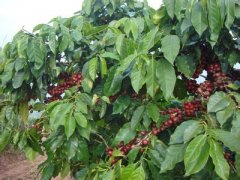
A brief introduction to the flavor, taste and aroma characteristics of Kenyan Jinchu boutique coffee beans
Aromatic, full-bodied, with fruit flavor, taste rich and perfect. Kenyan coffee has a wonderful fruit flavor, tastes like BlackBerry and grapefruit, and is a favorite of many coffee gluttons. This coffee has an excellent medium purity, crisp and refreshing taste. It has a fresh flavor and is most suitable for drinking iced coffee in summer. When tasting this coffee, such as

A brief introduction to the Market Price of Fine Coffee Bean varieties in Jinchu Valley, Kenya
Internationally, the increase in the number of Kenyan coffee is obvious, from 1969 to 1970, when 800000 bags were exported, to 1985 and 1986, when the output increased to 2 million bags. Now the yield is stable at 1.6 million bags, with an average yield of about 650kg per hectare. Even before coffee prices skyrocketed in recent years, the average price of coffee in Kenya had been rising. Price ratio from 1993 to 1994: 12
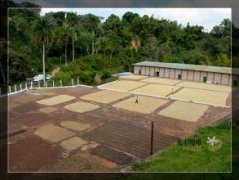
A brief introduction to the flavor, taste and aroma characteristics of Kenyan Jinchu boutique coffee beans
Large farms usually have independent treatment facilities. A large number of small farmers usually pick ripe coffee fruits by hand. Coffee picking is a labor-intensive job that requires the whole family to deploy and even hire workers during the harvest season. The fresh fruits of the picked coffee need to be promptly transported to the cooperative-owned coffee processing plant for pulping, and the means of transport may be ox carts.

A brief introduction to the flavor and aroma characteristics of Kenyan Jinchu boutique coffee beans with sweet green tea
Aromatic, full-bodied, with fruit flavor, taste rich and perfect. Kenyan coffee has a wonderful fruit flavor, tastes like BlackBerry and grapefruit, and is a favorite of many coffee gluttons. This coffee has an excellent medium purity, crisp and refreshing taste. It has a fresh flavor and is most suitable for drinking iced coffee in summer. When tasting this coffee, such as

Rich and perfect taste of Kenya Jinchu boutique coffee beans grinding degree baking degree treatment method simple
SL-28 and SL-34 help Kenyan coffee to form its own unique flavor characteristics and establish a perfect reputation in the coffee industry. Although the yield of SL28 was not as high as expected the copper leaf color and broad bean-shaped beans have great sweetness balance and complex flavor as well as significant citrus and black plum characteristics. While SL34 and SL28 are similar in flavor, except that they are more complex.

A brief introduction to the market price of Kenyan Jinchu boutique coffee bean varieties with rich and perfect taste
Some buyers, especially Japanese businessmen, have expressed dissatisfaction with the Kenyan coffee industry system. Some businessmen say that the quality of coffee in the country has declined, and point out that buying directly from farmers may be a way to improve the quality. But in any case, Kenya's detailed rules and regulations and sound procedures are a model for all coffee producing countries to learn from.

Green tea sweet Kenya Kam Chu Valley fine coffee beans cultivation geographical location climate altitude profile
The usual choice of light roasting, but in order to retain the original very rich fruit flavor in the raw beans, we will enter the bean temperature to 210℃, temperature point to maintain at 125℃, into the pot after observing the temperature point after the small fire steam roasting, in 4 minutes and 30 seconds to observe the coffee beans white evenly, and then urge the fire to 5 minutes and 30 seconds to complete dehydration, in 8 minutes to reach 175℃ when the heat is reduced, so that coffee

Brief introduction of planting Market Price of Fine Coffee Bean varieties in Jinchu Valley of Kenya with Sweet Cherry
Large farms usually have independent treatment facilities. A large number of small farmers usually pick ripe coffee fruits by hand. Coffee picking is a labor-intensive job that requires the whole family to deploy and even hire workers during the harvest season. The fresh fruits of the picked coffee need to be promptly transported to the cooperative-owned coffee processing plant for pulping, and the means of transport may be ox carts.
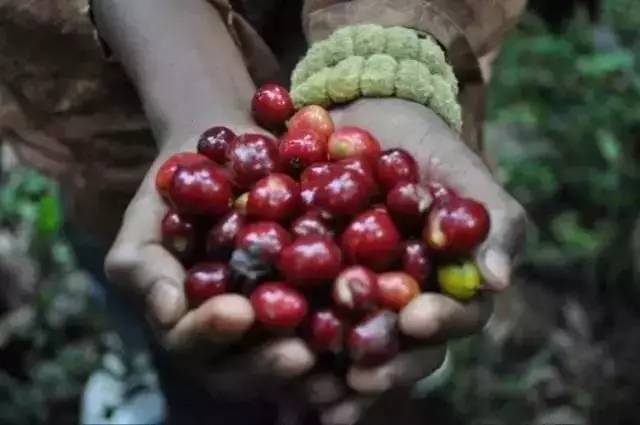
Coffee farmers carry coffee now and in the future!
In this world, there are such a group of people, they deal with the land every day, they are not afraid of the wind, not afraid of the sun, they check from the source of coffee planting, they are diligent in the coffee field every day, care for every coffee, they are coffee farmers! The so-called grain is hard, and it is not too much to use on coffee. Please cherish every cup of coffee we drink,

A brief introduction to the origin, development, history and culture of Kenya Jinchu boutique coffee beans with rich and perfect taste.
Some buyers, especially Japanese businessmen, have expressed dissatisfaction with the Kenyan coffee industry system. Some businessmen say that the quality of coffee in the country has declined, and point out that buying directly from farmers may be a way to improve the quality. But in any case, Kenya's detailed rules and regulations and sound procedures are a model for all coffee producing countries to learn from.

A brief introduction to the description of the flavor and aroma characteristics of Kenya Jinchu boutique coffee beans with cherry sweetness
Kenya AA coffee beans are adjacent to Ethiopia, the origin of Arabica coffee trees in the north of Kenya, but it was not until the beginning of the 20th century that they began to cultivate coffee. In the 19th century, missionaries introduced Arabica trees from the leaves, but did not plant them in large quantities. It was not until 1893 that coffee was cultivated on a large scale by the introduction of Brazil's ancient bourbon caffeine seeds. That is to say, at present

A brief introduction to the History and Culture of the Origin and Development of Fine Coffee beans in Jinchu Valley, Kenya
Kenya AA coffee beans are adjacent to Ethiopia, the origin of Arabica coffee trees in the north of Kenya, but it was not until the beginning of the 20th century that they began to cultivate coffee. In the 19th century, missionaries introduced Arabica trees from the leaves, but did not plant them in large quantities. It was not until 1893 that coffee was cultivated on a large scale by the introduction of Brazil's ancient bourbon caffeine seeds. That is to say, at present

A brief introduction to the treatment method of grinding degree and baking degree of Kenyan Jinchu Valley boutique coffee beans with sweet cherry
SL-28 and SL-34 help Kenyan coffee to form its own unique flavor characteristics and establish a perfect reputation in the coffee industry. Although the yield of SL28 was not as high as expected the copper leaf color and broad bean-shaped beans have great sweetness balance and complex flavor as well as significant citrus and black plum characteristics. While SL34 and SL28 are similar in flavor, except that they are more complex.

A brief introduction to the planting Market Price of Fine Coffee Bean varieties in Jinchu Valley of Kenya with fresh Flavor
Kenya AA coffee beans are adjacent to Ethiopia, the origin of Arabica coffee trees in the north of Kenya, but it was not until the beginning of the 20th century that they began to engage in coffee cultivation. In the 19th century, missionaries introduced Arabica trees from the leaves, but did not plant them in large quantities. It was not until 1893 that coffee was cultivated on a large scale after the introduction of Brazil's ancient "bourbon" coffee seeds. That is to say,

A brief introduction to the treatment method of grinding degree and baking degree of Kenya Jinchu boutique coffee beans with fresh flavor
There are different flavors of coffee, so you can't drink three or four cups in a row like tea or cola, but the size of a formal coffee cup is just right. The average amount of coffee to drink is 80-100cc. Sometimes if you want to drink three or four cups in a row, you have to dilute the concentration of coffee, or add a lot of milk, but you still have to consider the degree of physical needs to add or decrease coffee.

A brief introduction to the history and culture of the origin and development of Kenyan Jinchu boutique coffee beans with fresh flavor
Kenya AA coffee beans are adjacent to Ethiopia, the origin of Arabica coffee trees in the north of Kenya, but it was not until the beginning of the 20th century that they began to cultivate coffee. In the 19th century, missionaries introduced Arabica trees from the leaves, but did not plant them in large quantities. It was not until 1893 that coffee was cultivated on a large scale by the introduction of Brazil's ancient bourbon caffeine seeds. That is to say, at present

A brief introduction to the treatment method of grinding degree and baking degree of Kenyan Jinchu boutique coffee beans with sweet green tea
We still choose the familiar medium and shallow baking, but in order to retain the very rich fruit flavor in the raw beans, we increase the temperature of the beans to 210 ℃ and keep the temperature at 125 ℃. After entering the pot, we observe the return point and steam the coffee beans over low heat, and observe until the coffee beans whiten evenly at 4 minutes and 30 seconds, then press the fire to complete the dehydration in about 5 minutes and 30 seconds, and then reduce the firepower at 175 ℃ in 8 minutes to make the coffee coffee.